
Connected Commerce: POS and Inventory Without the Guesswork
The Point and Got You are separate applications with a shared destination. The Point records what happened at checkout. Got You explains what remains, where it moved, and what needs attention. Connecting those records removes duplicate entry while keeping sales and inventory understandable on their own.
Review the Commerce Starter pilot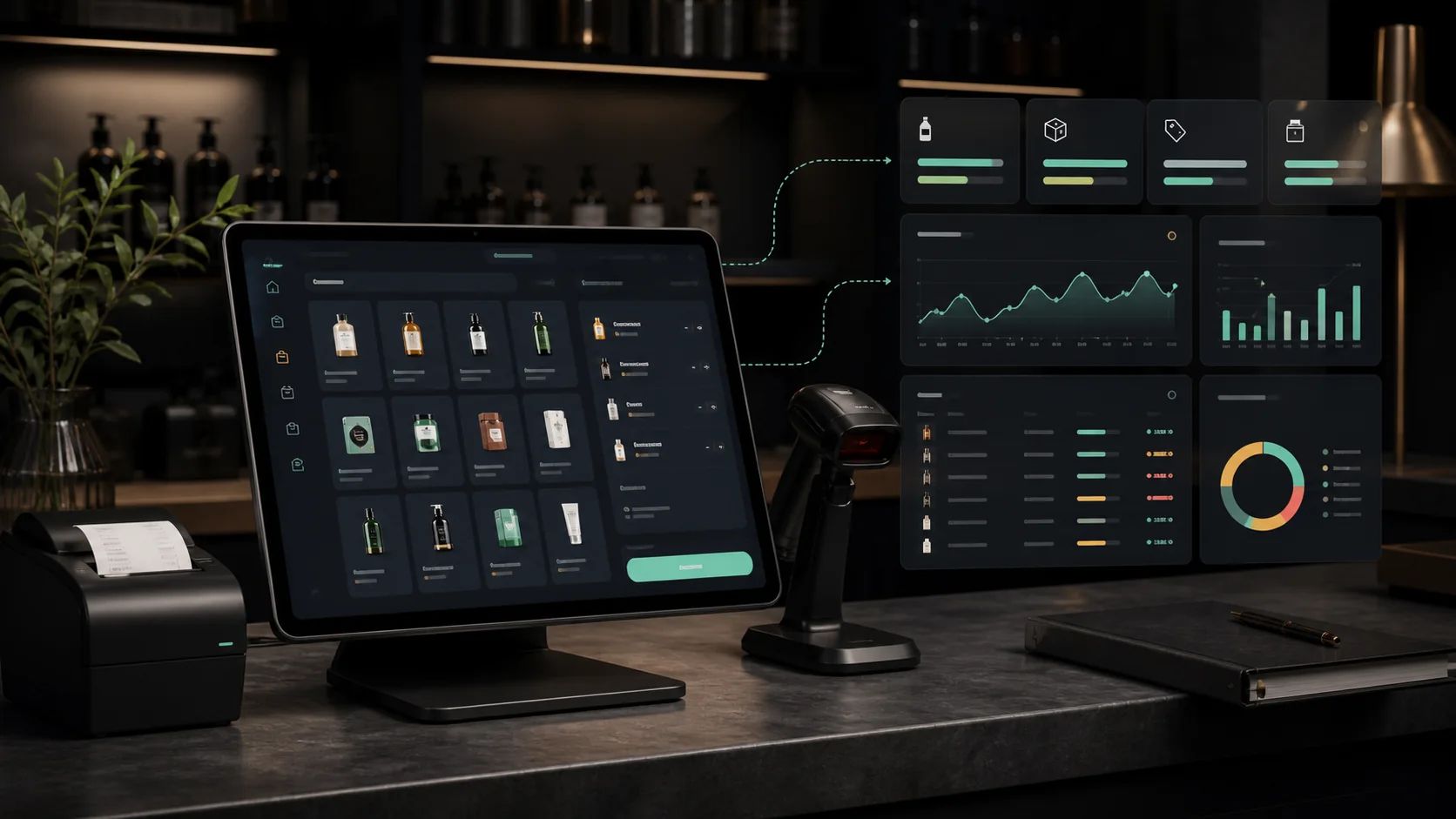
One sale, two useful records
At checkout, The Point needs a product, quantity, price, tax treatment, payment result, and receipt outcome. Got You needs the same product identity, the quantity removed, the source location, and a timestamp. A shared transaction reference connects the records without turning the inventory screen into a cash register.
Returns, voids, damaged stock, transfers, and corrections must follow the same principle. Inventory should change because a named event occurred, not because a total was silently overwritten. This creates an audit trail that a small business owner can understand without becoming a database administrator.
Barcodes and imports that fail safely
A barcode is an identifier, not the entire product record. The system still needs a useful name, price, tax class, unit, category, reorder level, and optional supplier details. Scanning should find a known item quickly and offer a controlled creation path when the code is new.
CSV import is valuable because businesses often begin with spreadsheets or exports from another system. A responsible importer maps columns, previews several rows, flags duplicates and invalid values, and reports what changed. It should never replace live data simply because two filenames match.
Daily guidance instead of a giant manual
The most helpful documentation appears when the task begins. Opening guidance can confirm the register, receipt path, scanner, and starting cash assumptions. Receiving guidance can verify quantities and locations. Closing guidance can identify incomplete payments, unexpected inventory movement, and records that need review.
The help control remains optional. A returning cashier can work uninterrupted, while a new employee can launch a focused walkthrough and continue where they stopped. Plain language is preferred over exposing internal database terms.
Data boundaries and ownership
WordPress can continue to provide authenticated user identity while application records move into purpose-specific relational storage. Sales, stock, locations, suppliers, and movement history have different retention and access needs than a website profile. Separating those responsibilities makes future scaling and auditing more realistic.
Sensitive credentials and payment secrets do not belong in browser code or ordinary application tables. Access should follow business roles, exports should be available to the owner, and backups should be tested through recovery—not merely reported as successful.
Useful answers before you begin.
Do The Point and Got You have to be purchased together?
They are designed to remain understandable separately while offering a paired workflow. The current Commerce Starter pilot focuses on configuring and testing them together.
Can existing inventory be imported?
The intended workflow supports mapped CSV imports with preview and validation. Assistance is included in the pilot scope, while complex legacy-system integration is evaluated separately.
Does the system process card payments?
Payment-provider integration depends on the selected processor, hardware, region, and security requirements. The product page and pilot scope should be checked for the currently supported path.